
By Bruce Atkins | Published April 15, 2023 | Posted in Employment Law, Retaliation and Whistleblowing | Tagged Tags: CEPA, out-of-state employees | Comments Off on NJ Whistleblower Law May Apply to a Company’s Out-of-State Employees
NJ Whistleblower Law May Apply to a Company’s Out-of-State Employees
New Jersey’s Conscientious Employee Protection Act (CEPA) was described as the nation’s “most far reaching whistleblower statute” when it was enacted in 1986. The purpose of CEPA is to protect whistleblowing activities that benefit the health, safety and welfare of the public by giving employees protection when they report their employers’ unlawful conduct. It protects Read More
Read More
Refusal to Hire Based on Immigration Status Is Illegal Discrimination
Among the many hurdles faced by immigrants to the U.S., getting a desirable job can be one of the biggest. Companies of all sizes and across various industries sometimes exhibit prejudice against hiring foreign-born workers, even those whose employment is authorized by law. However, it is illegal for employers to discriminate against job candidates or Read More
Read More
What Is “Unwelcome Conduct” That Can Create a Sexually Hostile Workplace?
A hostile work environment is a type of sexual harassment that occurs when an employee is subjected to unwelcome verbal or physical conduct that is so severe or pervasive that a reasonable person would find the workplace intolerable. Typically, the unwelcome conduct must be persistent and repeated. However, in New Jersey, a single incident can Read More
Read More
NJ Employers Can’t Discriminate Based Solely on Positive Cannabis Testing
Recreational use of cannabis was legalized in New Jersey in 2021. For the first year or more, there was some uncertainty regarding how employers could treat employees who tested positive for cannabis. In September 2022, the NJ Cannabis Regulatory Commission (NJ-CRC) provided some welcome updates about employers’ regulation of marijuana use in the workplace. It Read More
Read More
What’s New in New Jersey Employment Law in 2023
Several new employment laws either came into effect or will go into effect in the first few months of the new year. Most of the new laws benefit employees in New Jersey, including modest minimum wage increases across all industries and enhancements to compensation and protections for employees facing mass layoffs. As of January 1, Read More
Read MoreHow Can You Prove a Case of Sexual Discrimination at Your Job?
Federal and state laws prohibit workplace discrimination based on sex, gender and orientation, requiring employers to treat everyone equally when it comes to interviewing, hiring, paying, promoting, disciplining and firing. Title VII of the federal Civil Rights Act and New Jersey’s Law Against Discrimination (NJLAD) also give victims of discrimination the ability to hold employers Read More
Read MoreWhat Remedies Do You Have if Your FMLA Rights Are Violated?
The federal Family Medical Leave Act (FMLA) gives many employees the right to take up to 12 weeks of unpaid leave per year to take care of their own serious medical conditions or those of family members. However, employers sometimes fail to comply with the FMLA by disallowing leave, by cutting the pay of employees Read More
Read MoreWhat Is the ABC Test for Classifying a Worker as an Independent Contractor?
The difference between an independent contract and an employee is a major point of friction in employment law. Companies often misclassify workers as independent contractors, either intentionally or by mistake. When done intentionally, it’s usually an effort to save money by not having to pay for a worker’s health insurance and other benefits and not Read More
Read MorePending New Jersey Bill Aims to End Discrimination Against Temporary Workers
New Jersey’s warehouse and e-commerce sectors are booming but the growth depends in large part on the state’s 125,000-plus temp workers, who are disproportionately Black and Latino, and who are routinely paid less than permanent workers. State lawmakers are working on a bill called The Temporary Workers’ Bill of Rights to extend equal rights to Read More
Read MoreNJ Employers May Not Discriminate Against Recreational Marijuana Users
The New Jersey statute legalizing marijuana use also prohibits employers from discriminating against employees found to have cannabis in their systems.
Read More
Neil H. Deutsch has been practicing law for over 35 years and is known as a skilled negotiator in employment and discrimination law. He believes in a bottom-line approach of risk analysis and cost effectiveness for his clients. "Case evaluation is something we take seriously," says Mr. Deutsch who seeks top net dollar for his…

Bruce L. Atkins is the Senior Managing Partner at Deutsch Atkins & Kleinfeldt P.C., a prominent plaintiff employment law firm in the tri-state area. Mr. Atkins believes employees’ rights should be aggressively pursued when they’ve been wrongfully dealt with by their employers. He brings this philosophy to his practice when considering each case and its…

Adam J. Kleinfeldt joined Deutsch Atkins & Kleinfeldt, P.C. in March of 2015. He primarily represents individuals in employment litigation such as discrimination, retaliation and whistle blowing matters. He has extensive experience in all phases of the litigation process. Adam has obtained significant results for his clients, including a $525,000 jury verdict in a sexual…

Debra M. McGarvey joined Deutsch Atkins & Kleinfeldt, P.C. in December 2019. She has extensive experience defending employees and employers in state and federal court in employment litigation matters. She has represented clients on various issues arising out of the New Jersey Law Against Discrimination (NJLAD), the New Jersey Conscientious Employee Protection Act (CEPA), the…
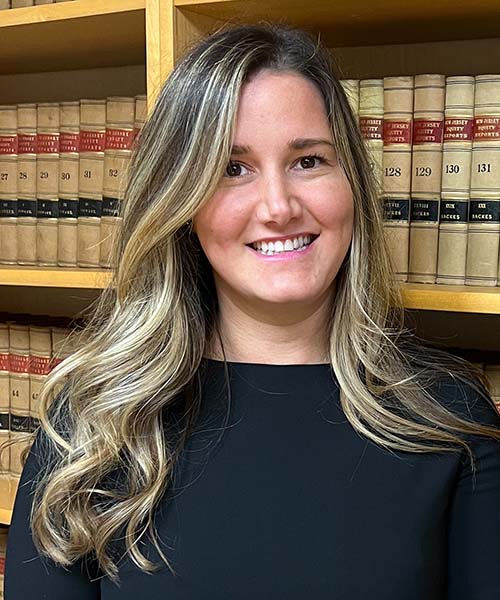
Carly Skarbnik Meredith, Esq. is a Partner at the firm. Carly has focused her career exclusively in the field of employment law. She has a plethora of experience representing both employees and employers with their employment issues, needs, and concerns. She believes representing both employees and employers has made her an extremely well-rounded client advocate.…