

By Bruce Atkins | Published February 11, 2025 | Posted in Employment Law | Tagged Tags: Exemptions, overtime pay, Proof | Comments Off on U.S. High Court Clarifies Proof Needed for Overtime Pay Exemptions

U.S. High Court Clarifies Proof Needed for Overtime Pay Exemptions
The Fair Labor Standards Act (FLSA) imposes rules for overtime pay across the country. The law requires employers to compensate eligible employees at a rate of at least one and a half times their regular pay for hours worked beyond 40 in a workweek. The FLSA makes exemptions for certain employees. Employers bear the burden Read More
Read More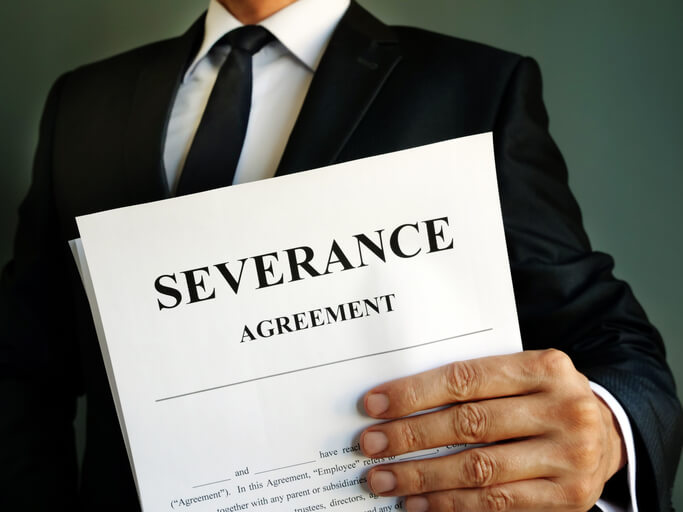
What At-Will Employees Should Know About Severance Agreements
Severance agreements are contracts that set the terms of an employee’s departure from a company. They are very important for at-will employees, who can be terminated by their employer at any time, with or without cause. A severance agreement provides financial compensation but also establishes conditions that the employee must adhere to, some of which Read More
Read More
New Jersey Pay Transparency Law Soon to Take Effect
New Jersey has enacted a law aimed at promoting pay equality by requiring employers to provide clear salary and benefits information in their job postings and advertisements. The law, which will take effect on June 1, 2025, is intended to reduce the wage gap and combat potential discrimination by ensuring that workers have access to Read More
Read More
New Protections for Domestic Workers Are in Effect in New Jersey
New Jersey’s new “Domestic Workers’ Bill of Rights” is landmark legislation that grants comprehensive protections to workers in child care, house cleaning and caregiving roles. This law, which took effect in July 2024, covers workers whether they are employed directly by households or via agencies. It applies to all domestic workers regardless of their immigration Read More
Read More
NJ Companies’ Out-of-State Employees Are Protected by the LAD
The New Jersey Law Against Discrimination (LAD) is among the nation’s strongest laws prohibiting workplace discrimination based on race, gender, age, disability, sexual orientation and other personal characteristics. The New Jersey Attorney General’s Division on Civil Rights (DCR) has recently clarified that the LAD’s protections extend to employees who reside and work remotely outside of Read More
Read More
Continuing Violations Extend the Deadline for Sexual Harassment Claims
In New Jersey, the statute of limitations for filing a sexual harassment claim is two years from the date of the last discriminatory act. However, an employee may be able to pursue legal action for discriminatory conduct that extends over a period of time, even if some of the conduct occurred outside the two-year period. Read More
Read More
Recognizing Disparate Impact Discrimination in the Workplace
Discrimination in employment can occur when a facially neutral policy or practice has a disproportionate adverse effect on members of a protected class, even though the policy does not explicitly target anyone based on personal characteristics such as race, ethnicity, religion, age, gender, sexual orientation or disability. This is known as disparate impact discrimination, and Read More
Read More
What to Do if You’re Being Terminated and Offered Severance
If your employment in New Jersey has been terminated, you may be faced with the decision about whether to accept a severance package. New Jersey law does not mandate that employers provide severance pay unless stipulated by a collective bargaining agreement or employment contract. However, many companies voluntarily offer severance packages to terminated employees. Understanding Read More
Read More
Red Flags to Watch for in Negotiating Employment Contracts
When an employer asks you to sign a contract as a condition of giving you the job, it’s essential to proceed with caution. This document will govern your employment relationship and outline your rights and responsibilities, so understanding every clause is critical. Begin by scrutinizing the compensation and benefits section to ensure it aligns with Read More
Read More
New Jersey Bill Would Require Employers to Adopt Heat Stress Prevention Plans
New Jersey lawmakers are advancing a measure to protect workers from the dangers of heat stress, a growing concern as climate change pushes temperatures to unprecedented levels. The bill, introduced in January 2024, seeks to establish standards that would mandate employers to safeguard their employees from the harmful effects of excessive heat. This legislative initiative Read More
Read More
Neil H. Deutsch has been practicing law for over 35 years and is known as a skilled negotiator in employment and discrimination law. He believes in a bottom-line approach of risk analysis and cost effectiveness for his clients. "Case evaluation is something we take seriously," says Mr. Deutsch who seeks top net dollar for his…

Bruce L. Atkins is the Senior Managing Partner at Deutsch Atkins & Kleinfeldt P.C., a prominent plaintiff employment law firm in the tri-state area. Mr. Atkins believes employees’ rights should be aggressively pursued when they’ve been wrongfully dealt with by their employers. He brings this philosophy to his practice when considering each case and its…

Adam J. Kleinfeldt joined Deutsch Atkins & Kleinfeldt, P.C. in March of 2015. He primarily represents individuals in employment litigation such as discrimination, retaliation and whistle blowing matters. He has extensive experience in all phases of the litigation process. Adam has obtained significant results for his clients, including a $525,000 jury verdict in a sexual…

Debra M. McGarvey joined Deutsch Atkins & Kleinfeldt, P.C. in December 2019. She has extensive experience defending employees and employers in state and federal court in employment litigation matters. She has represented clients on various issues arising out of the New Jersey Law Against Discrimination (NJLAD), the New Jersey Conscientious Employee Protection Act (CEPA), the…
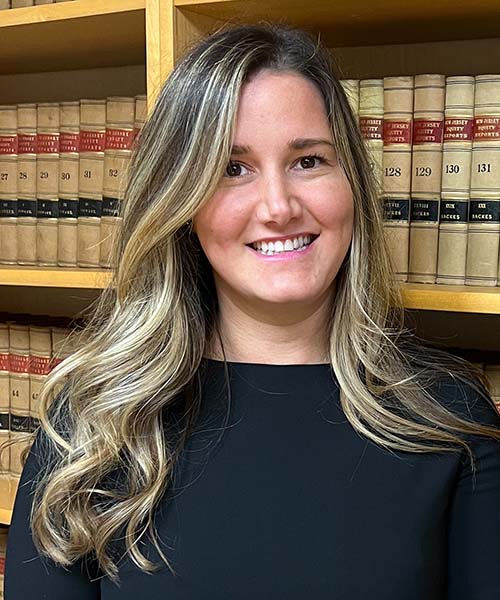
Carly Skarbnik Meredith, Esq. is a Partner at the firm. Carly has focused her career exclusively in the field of employment law. She has a plethora of experience representing both employees and employers with their employment issues, needs, and concerns. She believes representing both employees and employers has made her an extremely well-rounded client advocate.…