

The New Jersey Conscientious Employee Protection Act (CEPA) is a powerful law designed to promote transparency and integrity within New Jersey’s workforce. Its primary purpose is to encourage employees to report illegal or unethical activities without fear of retaliation from their employers.
CEPA is the state’s “whistleblower law.” It covers employees who disclose or threaten to disclose to a supervisor or public body any activity, policy or practice of the employer that the employee reasonably believes is in violation of a law, or a rule or regulation promulgated pursuant to law. Additionally, CEPA protects employees who provide information to, or testify before, any public body conducting an investigation, hearing or inquiry into any violation of law. The Act also extends its protections to employees who object to, or refuse to participate in, any activity, policy, or practice that they reasonably believe is in violation of a law, is fraudulent or criminal or is incompatible with a clear mandate of public policy concerning public health, safety or welfare or protection of the environment.
To gain CEPA protection, an employee must satisfy certain prerequisites. First, the employee must have a reasonable belief that the employer’s conduct is illegal, fraudulent or against public policy. The belief must be objectively reasonable, meaning that a person of ordinary prudence in the same situation would conclude that the conduct is improper. Second, the employee must bring the improper conduct to the attention of a supervisor or a public body, provided there is not an immediate danger to public health and safety, and give the employer a reasonable opportunity to correct the issue. This step provides the employer with a chance to address the problem internally before external reporting.
Employees who prevail with CEPA claims can take advantage of statutory provisions designed to make them whole and to deter future violations by the employer. Remedies for CEPA violations include job reinstatement, which restores the employee to their former position, and back pay, which compensates for lost wages from the time of the retaliatory action until the resolution of the claim. Restored benefits are also provided, ensuring the employee receives any benefits they were entitled to before the retaliation. Additionally, in some cases, the court may award punitive damages, which are intended to punish particularly egregious conduct by the employer and deter similar actions in the future. CEPA also allows for the recovery of reasonable attorney’s fees and costs, making it financially feasible for employees to pursue their claims.
The attorneys of Deutsch Atkins & Kleinfeldt, P.C. in Hackensack, New Jersey help workplace retaliation victims pursue legal remedies. To schedule a confidential consultation with a supportive lawyer, call 551-245-8894 or contact us online.

Neil H. Deutsch has been practicing law for over 35 years and is known as a skilled negotiator in employment and discrimination law. He believes in a bottom-line approach of risk analysis and cost effectiveness for his clients. "Case evaluation is something we take seriously," says Mr. Deutsch who seeks top net dollar for his…

Bruce L. Atkins is the Senior Managing Partner at Deutsch Atkins & Kleinfeldt P.C., a prominent plaintiff employment law firm in the tri-state area. Mr. Atkins believes employees’ rights should be aggressively pursued when they’ve been wrongfully dealt with by their employers. He brings this philosophy to his practice when considering each case and its…

Adam J. Kleinfeldt joined Deutsch Atkins & Kleinfeldt, P.C. in March of 2015. He primarily represents individuals in employment litigation such as discrimination, retaliation and whistle blowing matters. He has extensive experience in all phases of the litigation process. Adam has obtained significant results for his clients, including a $525,000 jury verdict in a sexual…

Debra M. McGarvey joined Deutsch Atkins & Kleinfeldt, P.C. in December 2019. She has extensive experience defending employees and employers in state and federal court in employment litigation matters. She has represented clients on various issues arising out of the New Jersey Law Against Discrimination (NJLAD), the New Jersey Conscientious Employee Protection Act (CEPA), the…
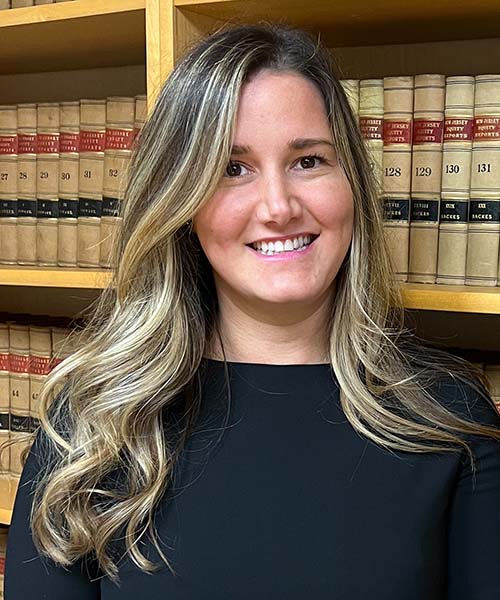
Carly Skarbnik Meredith, Esq. is a Partner at the firm. Carly has focused her career exclusively in the field of employment law. She has a plethora of experience representing both employees and employers with their employment issues, needs, and concerns. She believes representing both employees and employers has made her an extremely well-rounded client advocate.…